
chat with quetzecoatl and Kimura.
AUTHOR
I think it would be interesting to have a campfire
Megalomania quote:I'd probably tag along and leave them for that, tbh.
i'd probably wander off into the wilderness to fist a bear with my bare hands
Agreed. Also, if I wanted to start learning about quantum physics, where is the best place to start? What book?
Penemue quote:The building blocks/meat of it, or a more interesting take on the nature of QP/QM?
Agreed. Also, if I wanted to start learning about quantum physics, where is the best place to start? What book?
quetz's threads about past indiscretions scare me
quantum quote:The more interesting/theoretical stuff. But I suppose I might have to start with the fundamentals first, no?
The building blocks/meat of it, or a more interesting take on the nature of QP/QM?

Penemue quote:Eh, I don't know, because at some point you have to ask how basic do you want to get? To truly understand the mechanisms of QP/QM, it would help to have a pretty solid foundation in advanced mathematics and general physics. But that's like wanting the information to build a car with.
The more interesting/theoretical stuff. But I suppose I might have to start with the fundamentals first, no?
If you just want to read about how awesome the car is, and how it works in general, you can still appreciate several books that have been written with the lay person in mind.
I'd suggest starting with:
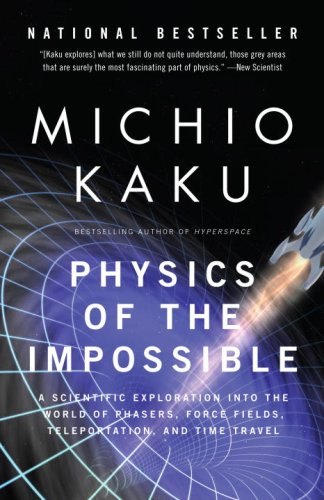
Then move on to:

Penemue quote:I'm just glad you didn't ask juan for advice on this.
Agreed. Also, if I wanted to start learning about quantum physics, where is the best place to start? What book?
Understand, this is coming from someone who will almost go with the second approach.
Thank you; these are both bookmarked.
apparition32 quote:This is another great approach. Again, made interesting for the lay person.
Perennial.

quantum quote:It works for me - you know how quickly/intuitively I grasp things, so I don't need to start out with the BASIC basics. Just enough so that I have a springboard to wrap my head around the more theoretical stuff.
Understand, this is coming from someone who will almost go with the second approach.
Then again, I spend so much time thinking abstractly and theoretically in my head that I'm probably already wired to ponder things from that angle.
Penemue quote:I think you'll love the first one.
It works for me - you know how quickly/intuitively I grasp things, so I don't need to start out with the BASIC basics. Just enough so that I have a springboard to wrap my head around the more theoretical stuff.
Then again, I spend so much time thinking abstractly and theoretically in my head that I'm probably already wired to ponder things from that angle.
shallowman quote:The only thing I'd ever ask Juan about is if I were doing a character study of the entitled douchebag.
I'm just glad you didn't ask juan for advice on this.
Another good one.

quantum quote:hmmm.
Another good one.
*adds to-read list*
pleasework quote:My only gripe is how repetitive it is with some of his other books. It's 60% newish material, 40% reprinted material.
hmmm.
*adds to-read list*
Kaku does that, too. Kind of annoys me when I buy one of their books.
-This message has been edited by quantum on 6/4/2011 12:30:22 AM
Lucas, did you see Kaku expanded on POTI? Physics of the Future. It's reeeeally good.
"Kaku (Physics of the Impossible), a professor of physics at the CUNY Graduate Center, gathers ideas from more than 300 experts, scientists, and researchers at the cutting edge of their fields, to offer a glimpse of what the next 100 years may bring. The predictions all conform to certain ground rules (e.g., "Prototypes of all technologies mentioned... already exist" , and some seem obvious (computer chips will continue to get faster and smaller). Others seem less far-fetched than they might have a decade ago: for instance, space tourism will be popular, especially once a permanent base is established on the moon. Other predictions may come true—downloading the Internet right into a pair of contact lenses—but whether they're desirable is another matter. Some of the predictions are familiar but still startling: robots will develop emotions by mid-century, and we will start merging mind and body with them. Despite the familiarity of many of the predictions to readers of popular science and science fiction, Kaku's book should capture the imagination of everyday readers."
"Kaku (Physics of the Impossible), a professor of physics at the CUNY Graduate Center, gathers ideas from more than 300 experts, scientists, and researchers at the cutting edge of their fields, to offer a glimpse of what the next 100 years may bring. The predictions all conform to certain ground rules (e.g., "Prototypes of all technologies mentioned... already exist"
, and some seem obvious (computer chips will continue to get faster and smaller). Others seem less far-fetched than they might have a decade ago: for instance, space tourism will be popular, especially once a permanent base is established on the moon. Other predictions may come true—downloading the Internet right into a pair of contact lenses—but whether they're desirable is another matter. Some of the predictions are familiar but still startling: robots will develop emotions by mid-century, and we will start merging mind and body with them. Despite the familiarity of many of the predictions to readers of popular science and science fiction, Kaku's book should capture the imagination of everyday readers."Quick reply
Sign in to post a message.Times shown in Eastern Time (ET).